The channel your account cannot see
Walk into almost any clinic in the UAE or Saudi Arabia and ask how patients get in touch, and the answer is WhatsApp. Not the contact form, not always a phone call, but a message. It is fast, it feels personal, and it fits how people already communicate. For a medspa or a dental clinic, WhatsApp is not a side channel. It is the booking engine.
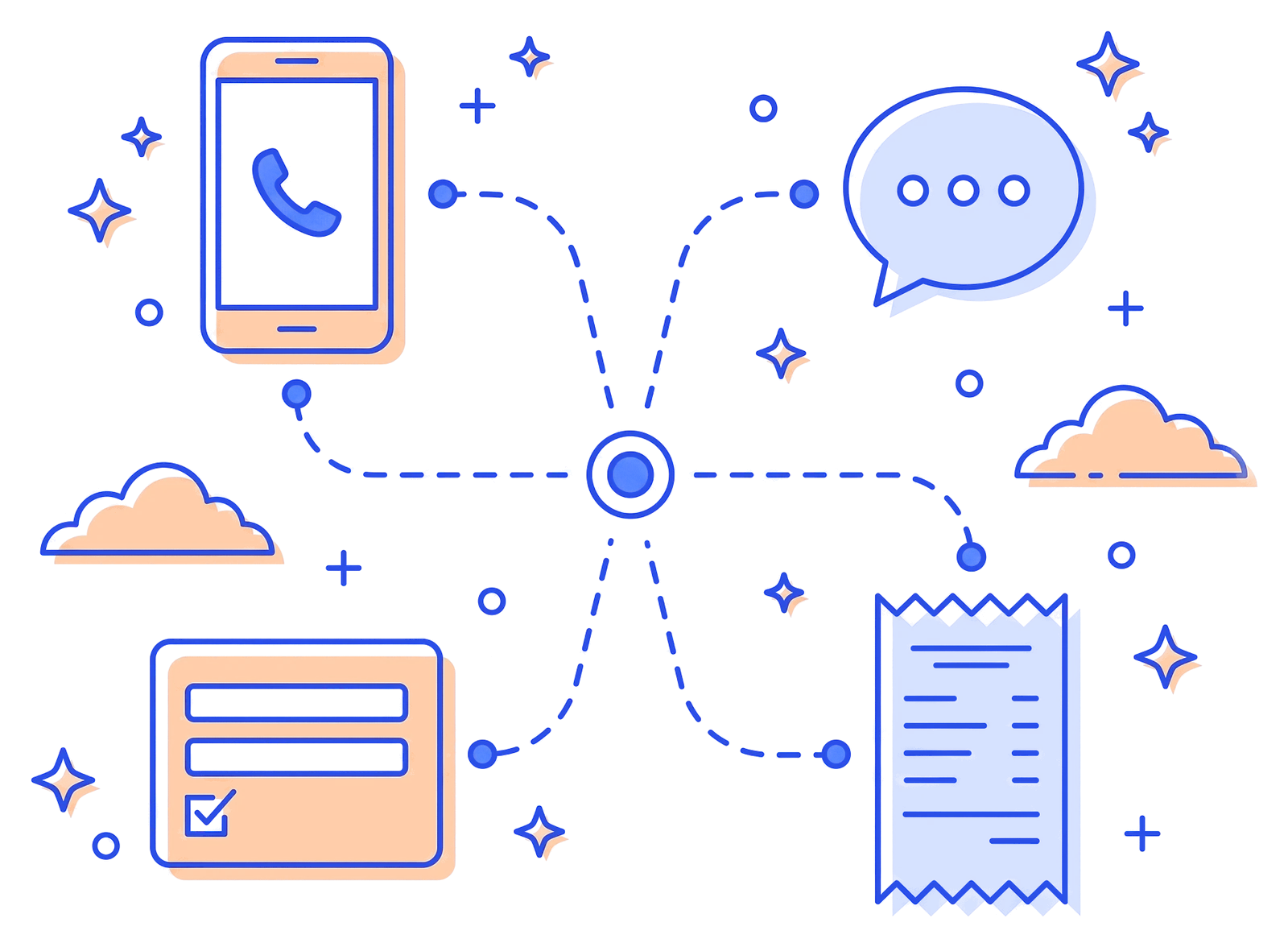
Now open the same clinic's Google Ads account and look at the conversions. More often than not, the only thing counted is a form submission, and sometimes a phone call. The channel that drives most of the inquiries is completely absent from the account. The bidding, which learns from conversions, is therefore optimizing toward the minority of patients who fill forms and ignoring the majority who message.
You are paying Google to find you the wrong kind of patient, and you cannot even see the mistake, because the reports look clean.
Fixing this is one of the highest value things you can do to a Gulf clinic account, and it is not complicated. Here is how the chain works.
- Step oneTrack the clickThe inquiry, inside Google Ads
- Step twoConnect the bookingBooked appointments from your own records
- Step threeFeed value backA value per treatment, back into Google
Why a click to chat is not a booking
Before the setup, one honest caveat. A WhatsApp click, the tap on a "chat with us" button that opens WhatsApp, is not a booking. It is not even always a real inquiry. Some people tap out of curiosity, some send a message and vanish, and some ask a question that never turns into an appointment. If you track the click to chat as your conversion and stop there, you have improved on tracking nothing, but you have replaced "form fills" with "chat opens," which is still upstream of the booking.
So think of it as a two stage measurement. The click to chat is the inquiry event you can capture inside Google. The booking is the outcome you capture in your booking system or your team's own records. The goal is to connect the two, so the account learns not just which ads produce chats but which ads produce chats that book. Skip the second stage and you will optimize toward whatever generates the most taps, which is not the same as the most patients.
Step one, track the click
Start by capturing the WhatsApp click as an event. On your landing page, every WhatsApp button or link should push an event into the dataLayer when clicked, with enough detail to be useful, at minimum the treatment and the page. In Google Tag Manager, create a trigger that fires on that dataLayer event, and a tag that sends it to Google Ads as a conversion and to your analytics. If your buttons are simple links to wa.me or api.whatsapp.com, you can also trigger on clicks to those URLs, but a dataLayer event you control is cleaner and lets you pass the treatment context.
Mark this conversion carefully. In most clinic accounts the WhatsApp click should be a secondary conversion at first, not the primary optimization target, precisely because it is upstream of the booking. Counting it, watching it, and reporting it is the point. Handing your entire bidding strategy to it before you have connected the booking stage is how accounts start chasing taps.
Step two, connect the booking
This is the stage most agencies skip, and it is where the value is. You need a way to know which WhatsApp inquiries became booked appointments. If your team logs bookings in a system, or even a shared sheet, you can match inquiries to bookings on phone number or a reference. Many clinics can produce a weekly booking rate from their own backend, which is exactly how we know that up to 76% of WhatsApp inquiries for the strongest treatments on one of our managed aesthetics accounts turned into a booked appointment, and that the weakest treatment line in the same group averaged 33% across the year.
Once you can identify booked inquiries, you can import them back into Google Ads as an offline conversion. The mechanism is Google's offline conversion import, which lets you send a conversion after the fact, tied to the original click through a click identifier or an enhanced conversions match. Now the account is not optimizing toward chat opens. It is optimizing toward chat opens that booked, which is a far better signal and the whole reason to do any of this.
Step three, feed value back
If you can go one step further, send the value of the booking as well, or at least a proxy for it by treatment. A booked implant consultation and a booked brow appointment are worth very different amounts, and an account that knows this can bid toward the high value treatments rather than the cheapest bookings. You do not need perfect revenue data. A sensible value per treatment type, fed in with the offline conversion, is enough for value based bidding to start favouring the cases that actually matter to your revenue.
This is the difference between an account that books a lot of low value appointments cheaply and an account that books the treatments that pay your rent. The plumbing is the same offline import. You are just attaching a number to the conversion.
Deduplication and attribution
Two practical warnings.
- First, deduplicate. If a patient taps WhatsApp three times before messaging, you do not want three conversions. Count the inquiry once per person per reasonable window, and if you import the booking as well, make sure the booking and the click are not both counted as the headline conversion. Decide which single event is your primary optimization target, usually the booked appointment once you have it, and keep the rest as secondary for visibility.
- Second, mind the attribution window. Clinic decisions, especially for high consideration dental and aesthetic cases, can take days or weeks. If your booking import happens outside Google's conversion window, the booking will not tie back to the click. Set a window that matches your real booking timeline, and log the click identifier at the moment of the inquiry so you can reconcile the booking later even if it arrives weeks after.
Common mistakes
- The most common mistake is stopping at the click to chat and calling it done. It is better than nothing and it is not enough.
- The second is optimizing bidding on the chat event before the booking stage exists, which teaches the account to chase taps.
- The third is hotlinking or hardcoding WhatsApp numbers in a way that breaks tracking when the page changes.
- And the fourth is treating this as a one time setup rather than something to audit, because tags break silently and a broken WhatsApp conversion can go unnoticed for weeks while your bidding drifts.
Get this right and your Gulf clinic account finally sees its own business. It knows which treatments and cities produce WhatsApp inquiries that book, it bids toward them, and your reports finally describe patients instead of clicks. In a market where WhatsApp is the booking engine, an account that cannot track WhatsApp is an account flying blind, and fixing that is usually the single biggest improvement you can make.